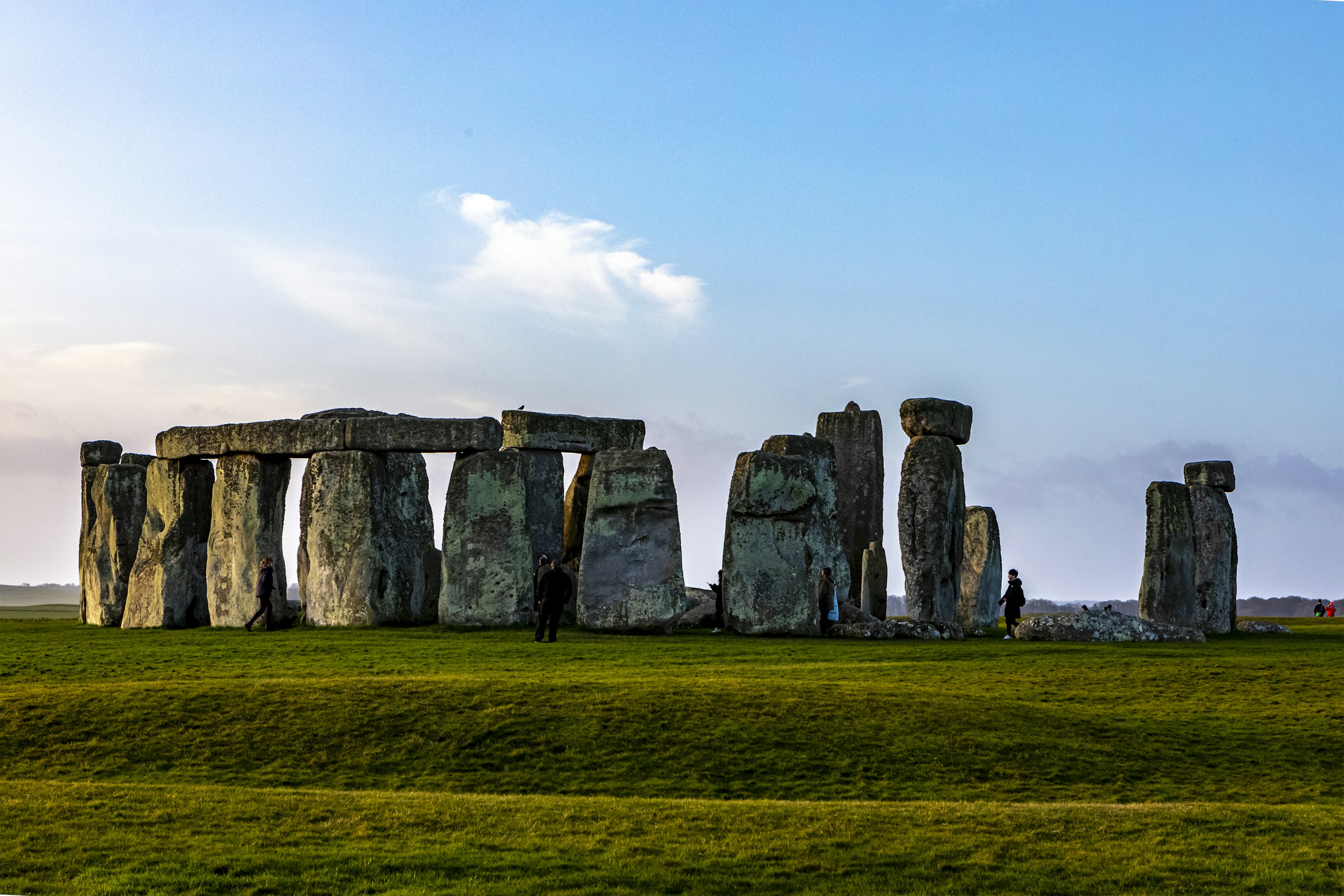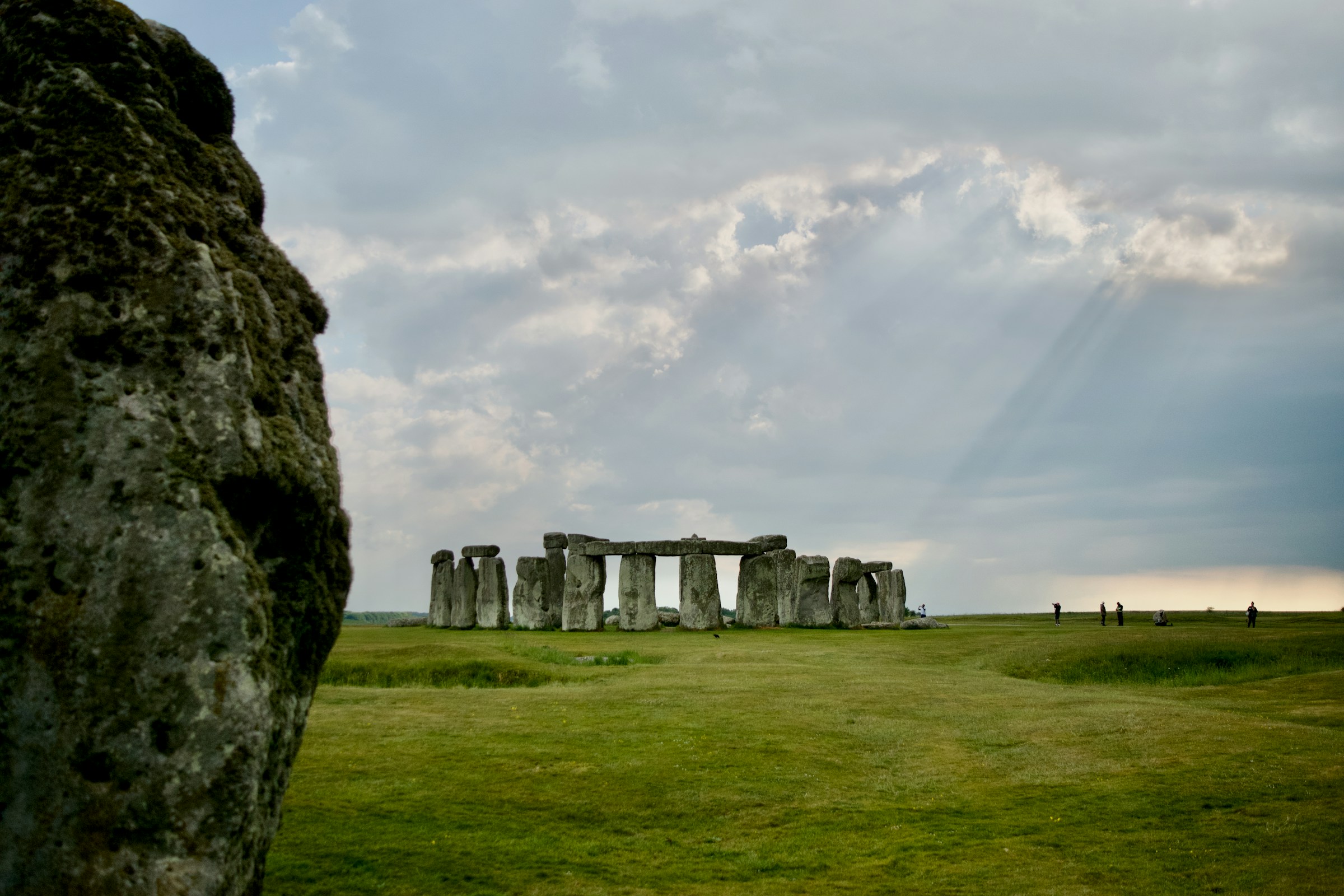
The sarsen circle at Stonehenge under a heavy sky, sunlight breaking through in shafts across the grass

DAWN AND DUSK, INSIDE THE STONES

Stonehenge, walked among,
not viewed from behind a rope.

Small-group access to the inner circle at dawn or dusk, arranged through the official access scheme, set inside a wider week across the Wiltshire landscape that produced it — Avebury, the long barrows, and the henge where the builders most likely lived.

ARRANGED THROUGH THE OFFICIAL ACCESS SCHEMEHow inner-circle access works SALISBURY PLAIN · WILTSHIRE

FOR PEOPLE WHO WANT THE EVIDENCE, NOT THE LEGEND

Not a photograph. Ground you can stand on.

Most visitors see Stonehenge from behind a rope, a few hundred metres off, for as long as the car park allows. It is possible to stand inside the sarsen circle itself, at an hour when the site is otherwise empty, with someone who can tell you what the excavation record actually shows and where it runs out.

We build trips around the wider Wiltshire landscape that produced Stonehenge — Avebury, Silbury Hill, West Kennet, Durrington Walls, Salisbury and Old Sarum — because the stone circle makes far more sense read alongside the earthworks around it than read alone.

Tell us which stones you want to stand among
INNER-CIRCLE MORNINGSAVEBURY DAYSLONG-BARROW WALKSFAMILY DAYSSOLSTICE WEEKS

SIX SITES, ONE NEOLITHIC LANDSCAPE

Where would you like to start?

Begin with a place, or with the kind of morning you're after.

The sarsen circle and trilithons, entered before opening hours or after closing, in a group small enough to hear the wind. Arranged through English Heritage's official Stone Circle Access scheme, weather and light permitting.
The largest stone circle on earth encloses part of a working village and is free to walk at any hour. Silbury Hill, the largest prehistoric man-made mound in Europe, rises nearby and has been closed to climbing since 2013 to halt erosion.

A chambered tomb raised around 3650 BC, its stone passage still open to enter, predating Stonehenge's sarsen circle by more than a thousand years.

Britain's largest henge enclosure, read by the Stonehenge Riverside Project as the settlement that housed the community who built the stone circle. Woodhenge's timber ring, found by aerial photograph in 1925, is marked today in concrete.

Britain's tallest spire, at 123 metres, over a cathedral built in a single sustained campaign between 1220 and 1258. The close holds one of four surviving original copies of Magna Carta and the world's oldest working clock.

An Iron Age hillfort reused by Romans, Saxons and Normans, and the site of Salisbury's first cathedral before the settlement moved down to the water meadows in the thirteenth century.

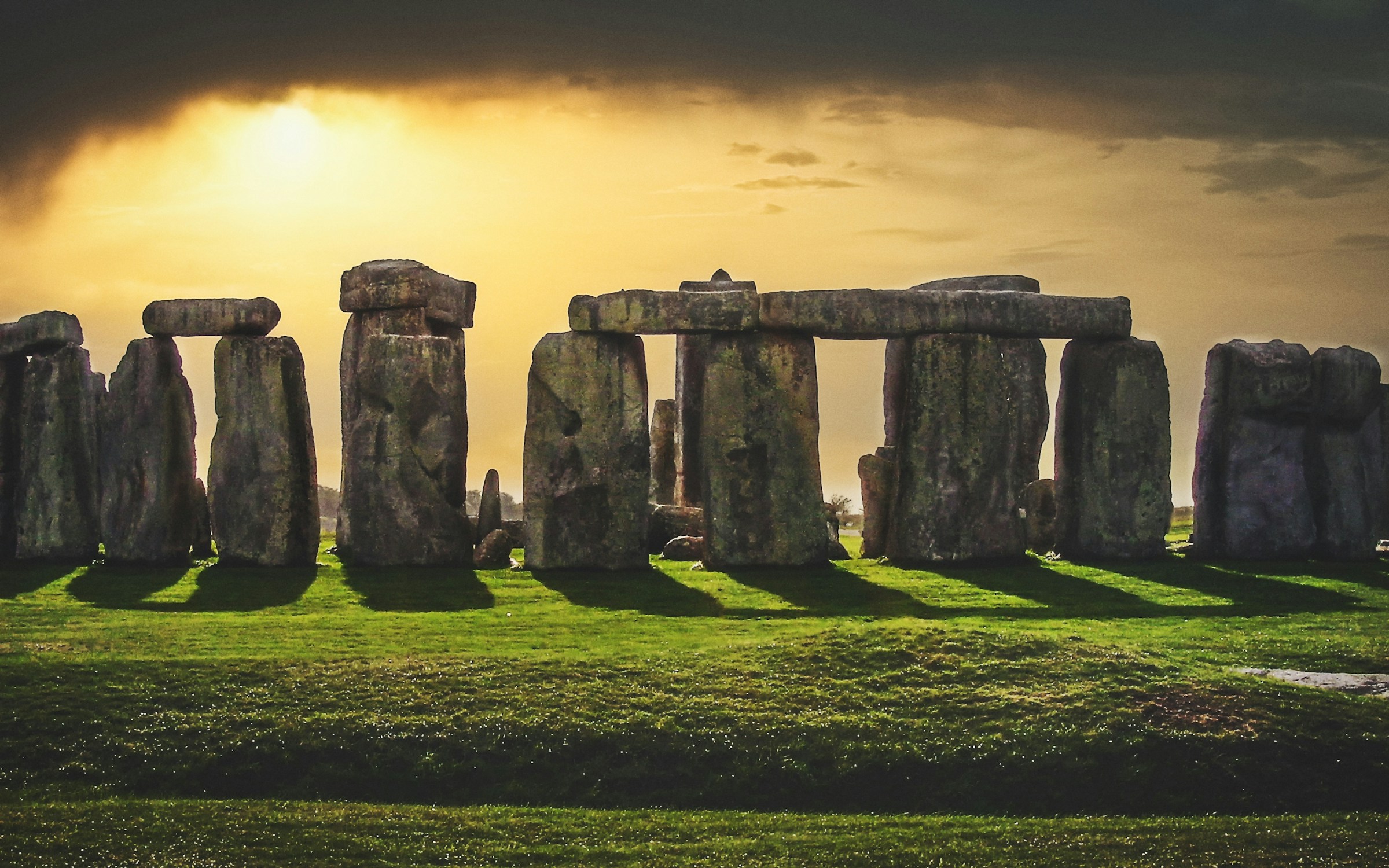
Stonehenge silhouetted against a warm sunset sky over the Salisbury Plain

BEFORE THE ROPE LINE WENT UP

The stones were placed on purpose.
The purpose is still being worked out.

Sarsens raised around 2500 BC, bluestones dragged and floated some 150 miles from the Preseli hills in Wales centuries earlier — the logistics alone rewrite what we assume Neolithic Britain could organise.
We do not sell you an answer to why. We give you the evidence, the competing readings of it, and enough quiet time at the stones to form your own view.

See how inner-circle mornings work

FIVE WAYS TO SPEND A MORNING ON THE PLAIN

Choose the visit,
not just the postcard.

Some people want an hour alone inside the sarsen circle at dawn. Some want a full day across Avebury's earthworks. Some are bringing children, or timing a trip to a solstice. Tell us which, and the day is built around it.

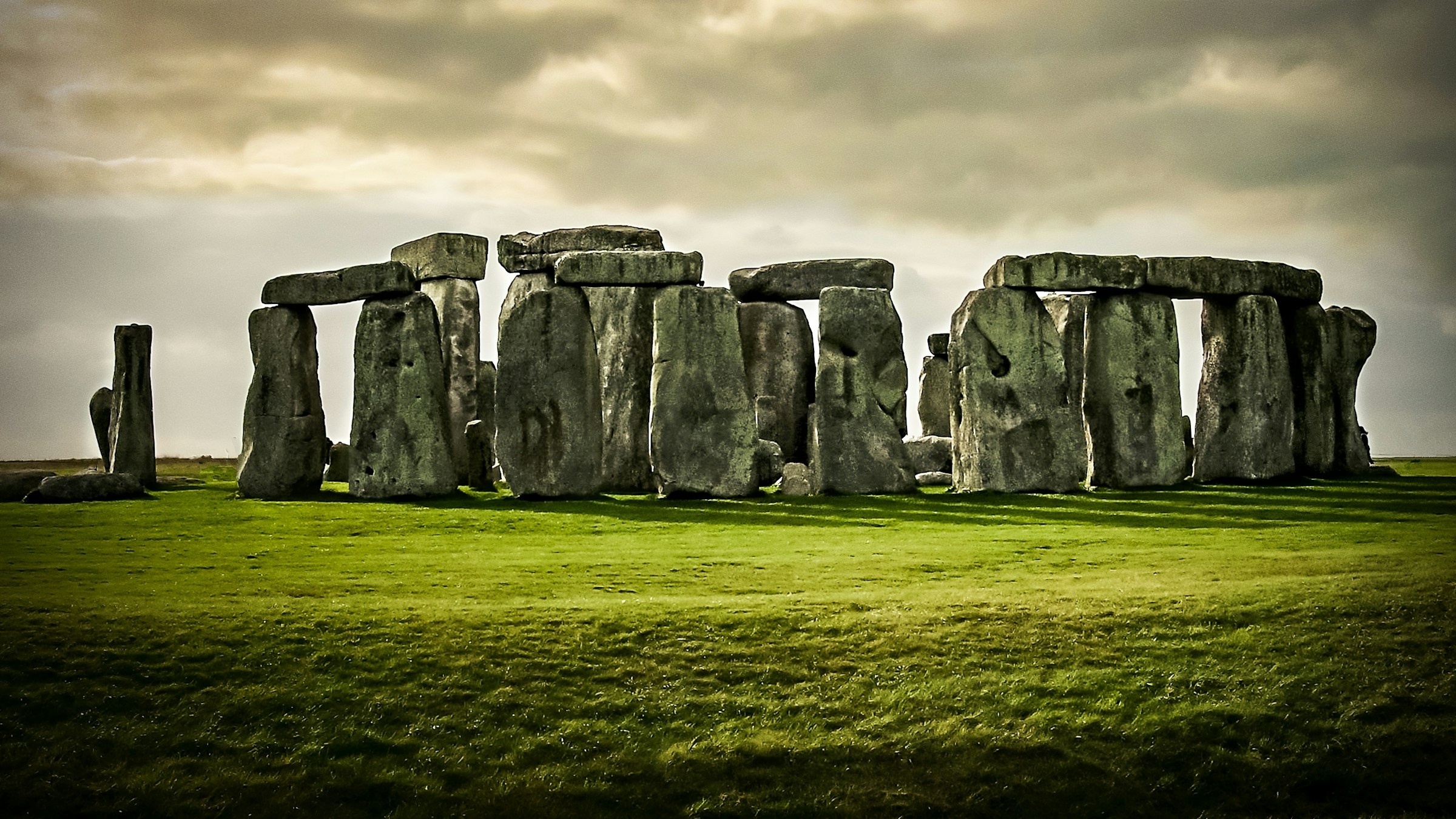
Close view of weathered sarsen boulders at Stonehenge against a pale sky

Inner-circle mornings

Inside the stones, before the gates open.

A small group let inside the rope line before the site opens to the public, arranged through English Heritage's official access scheme. First light on the sarsens, and time enough to walk the circle without a crowd behind you.

HOW WE ARRANGE IT

Access, arranged properly, explained plainly.

Inner-circle visits are booked through English Heritage's official Stone Circle Access scheme, in groups kept small enough to move quietly among the stones. We handle the paperwork and the timing, and build the landscape around it — Avebury, the barrows, the henges — so the day holds together.

01

Access arranged properly

Inner-circle time is booked through English Heritage's official Stone Circle Access scheme, not a workaround. We handle the booking, the identification requirements and the timing; you get a confirmed place inside the rope.

02

Evidence first, speculation labelled as such

Where the archaeology is settled — the sarsens' date, the bluestones' Welsh origin — we say so plainly. Where it is contested, such as exactly why the stones were raised, we present the competing arguments rather than pick the most dramatic one.

03

The landscape, not just the landmark

Stonehenge sits inside a monument complex several miles wide. Every itinerary includes at least one other Neolithic site, because the circle is a fragment of a much larger built landscape that mostly goes unvisited.

Start a conversation with Rowan

FIELD NOTES

A little context before you go.

Three short pieces on what you'll actually be standing among.

Stonehenge's stone circle under a bright, clouded sky, low light catching the grass

ALIGNMENT

Why the stones are aligned, and what that does and doesn't prove.

The sarsen circle's solar axis, confirmed by survey since the eighteenth century, and the limits of what it actually tells us.

Read the note

The sarsen circle's axis runs along the midsummer sunrise and the midwinter sunset, an alignment recorded by antiquarian surveyors as early as the 1720s and confirmed since with theodolites and, more recently, GPS.

What the alignment doesn't tell us is why. A confirmed solar axis is compatible with a calendar, a seasonal gathering, a funerary rite, or several of those across the centuries the site was in use — the geometry is solid; the intention behind it is argued over, and we say so rather than pick the most dramatic reading.

The wider landscape reinforces that the alignment was deliberate rather than coincidental: Durrington Walls, a few miles off, holds the reverse relationship, its avenue facing midwinter sunrise and midsummer sunset. Two monuments, the same axis, read in opposite directions.
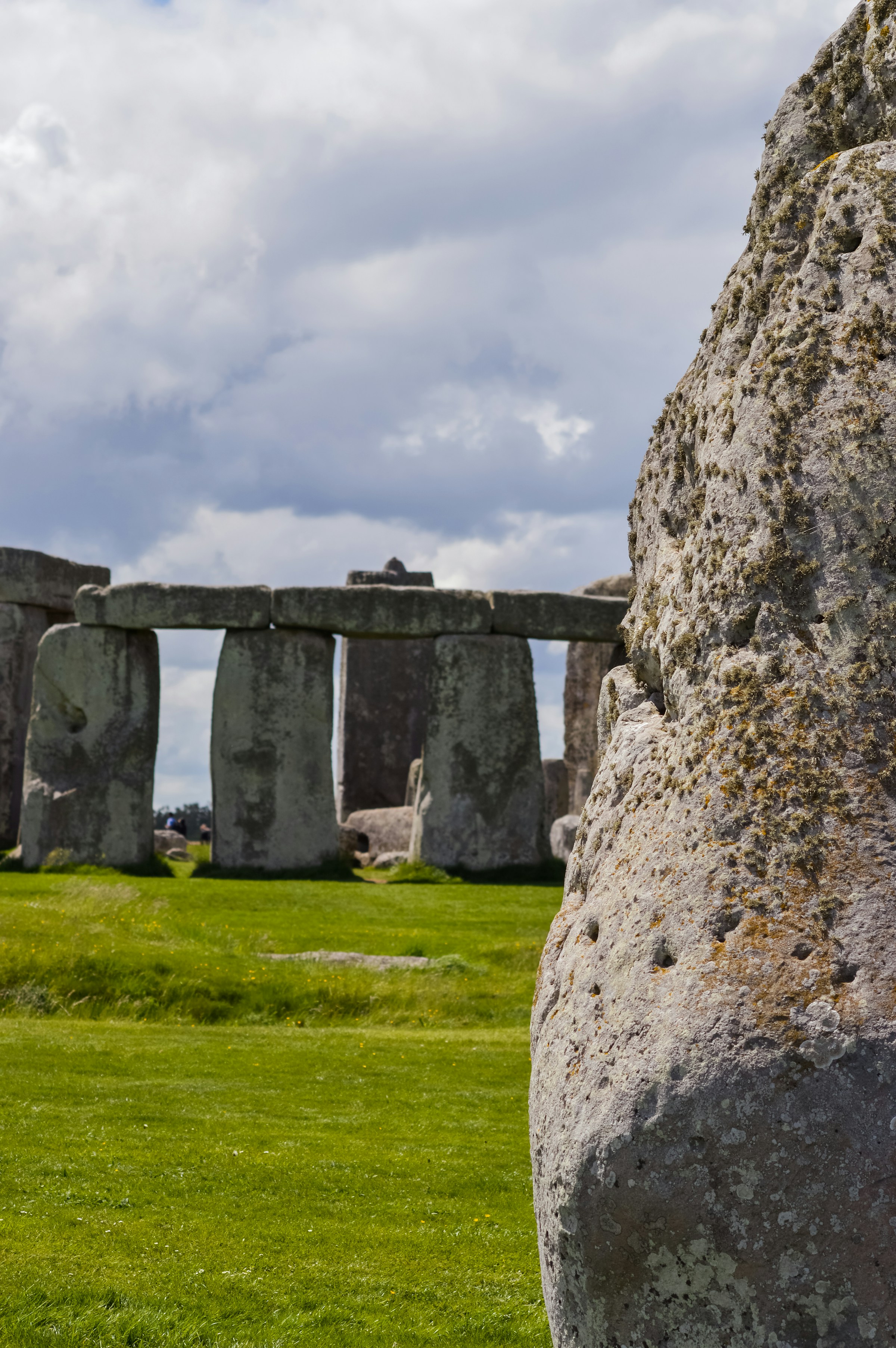
Standing stones at Stonehenge seen across open grass, with the visitor path in the distance

ACCESS

What inner-circle access really is, and what it isn't.

A plain account of English Heritage's Stone Circle Access scheme, and where we fit into it.

Read the note

Stone Circle Access is a scheme run by English Heritage, the charity that manages Stonehenge, allowing small groups inside the rope line before the site opens or after it closes. It costs more than general admission, is booked well in advance, requires photo ID on the day, and runs to English Heritage's rules, not ours.

We are a trip planner, not English Heritage, and we don't pretend otherwise. What we do is handle the booking and the paperwork, fold the visit into a wider itinerary, and tell you honestly what the hour will and won't include — nobody touches the stones, tripods and drones aren't permitted, and the visit can be shortened or cancelled for weather or ground conditions, without notice, by the custodian rather than by us.

A typical visit is a short briefing, then roughly an hour to walk the circle at your own pace in low light, in a group capped well below what the general daytime path carries. It is quieter than dramatic, which is rather the point.

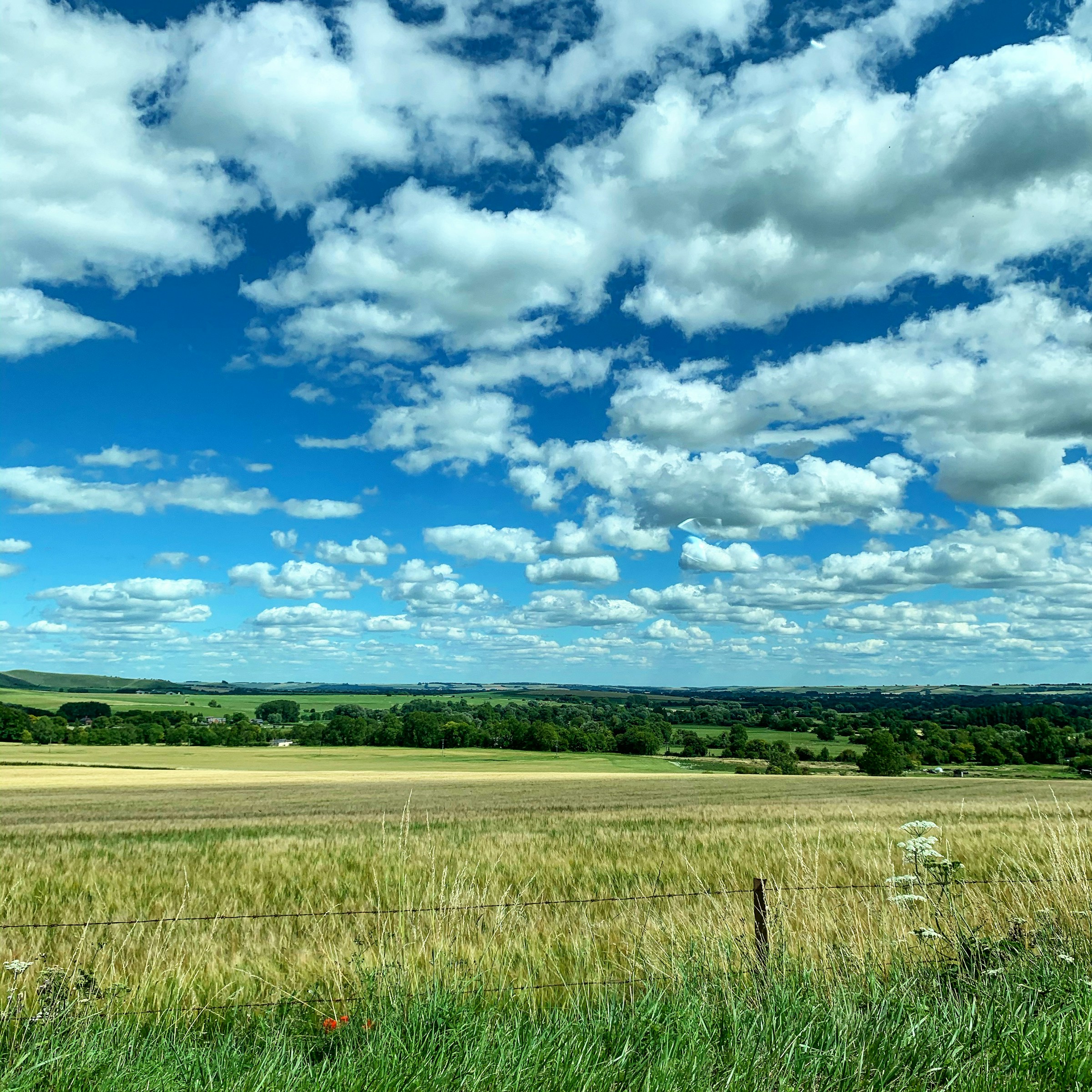
Rolling chalk grassland under a wide sky near Marlborough, Wiltshire

THE LANDSCAPE

The landscape beyond the fence.

Stonehenge sits inside a designated landscape of more than 700 monuments; almost none of them are on the visitor-centre loop.

Read the note

The Stonehenge, Avebury and Associated Sites World Heritage designation covers roughly 26 square kilometres around the stone circle alone, and English Heritage's own survey work has logged over 700 monuments within it — barrows, cursus monuments, henges and field systems, most of them visible only as shapes in the grass or not visible at all without aerial or geophysical survey.

Durrington Walls, a mile and a half northeast, is the largest henge enclosure in Britain and, on the current reading, the settlement that housed the people who built the stone circle. The Avenue, a processional earthwork, links Stonehenge to the River Avon; Woodhenge, its timber counterpart, was found only in 1925, from an aeroplane.

Avebury lies some 30 kilometres north, a separate component of the same World Heritage Site, with its own henge, its own avenue and Silbury Hill beside it. Seeing Stonehenge without seeing at least one of these is a bit like reading a single page of a book that was written to be read as a whole.

A SITE. A KIND OF VISIT. HOW MANY OF YOU.

Tell us roughly what you're after.

A few details now; we'll confirm access and timing by email.

Who's coming?

Not sure yet? Start with a conversation. We'll tell you honestly what's realistic for your dates.

BEFORE YOU ASK

A few things
worth knowing first.

What are the rules once we're inside the rope?

The stones aren't touched, the ground isn't left for the grass verges, and food, drink and tripods stay outside the circle; drones are prohibited across the whole site. A guide trained by English Heritage sets the pace and the pattern of movement. Nothing here is arranged by us alone — the visit runs to English Heritage's Stone Circle Access rules, and they govern the hour, not us.

What happens if the weather is bad?

Inner-circle visits go ahead rain or shine, since the circle is entirely outdoors; there is no refund for weather from us or from English Heritage. Salisbury Plain is exposed and can be genuinely cold before sunrise even in summer — dress for it. A clouded-over solstice sunrise is common and, in our experience, rarely disappoints once you're actually standing there.

How much walking is involved?

Modest, but uneven in places. Stonehenge itself is a short, mostly flat walk from the drop-off point used for Stone Circle Access. Avebury and the West Kennet Avenue involve two to three miles of flat walking if you cover the whole henge. West Kennet Long Barrow has a short but genuinely steep climb up a chalk bank, and the tomb chamber itself is entered stooped. Durrington Walls and Woodhenge are flat, open fields throughout.

Can we photograph inside the stones?

Handheld photography is permitted during a standard Stone Circle Access visit. Tripods, professional lighting and commercial shoots require separate arrangement with English Heritage well in advance, and drones are not permitted anywhere on the site.

Is inner-circle access manageable for limited mobility?

It needs an honest conversation in advance. The ground inside the circle is grass, sometimes wet and uneven, and the approach for Stone Circle Access is on foot from a vehicle drop point rather than the paved visitor path. West Kennet Long Barrow's bank and low chamber entrance are unsuitable for most mobility aids. Tell us what you need and we will say plainly which parts of the week work and which don't, rather than promise access we can't actually arrange.

How large can the group be?

English Heritage caps Stone Circle Access at a modest number of people per slot, generally moved through the circle in smaller clusters behind a guide rather than as one crowd. We keep the groups we arrange well inside that cap; a larger party is usually better served by two consecutive time slots than one oversized one, and we'll tell you which makes more sense for your numbers.

NOTHING IS BOOKED YET

A quiet place
to begin.

Stonehenge Inner CircleInner-circle dawn2 adults · 0 under 18s

We’ll prepare an email for you to review and send to Rowan. These details stay in this page until you choose to open your email app.